The Difference Between Basic Testing and Certified Leakage Testing
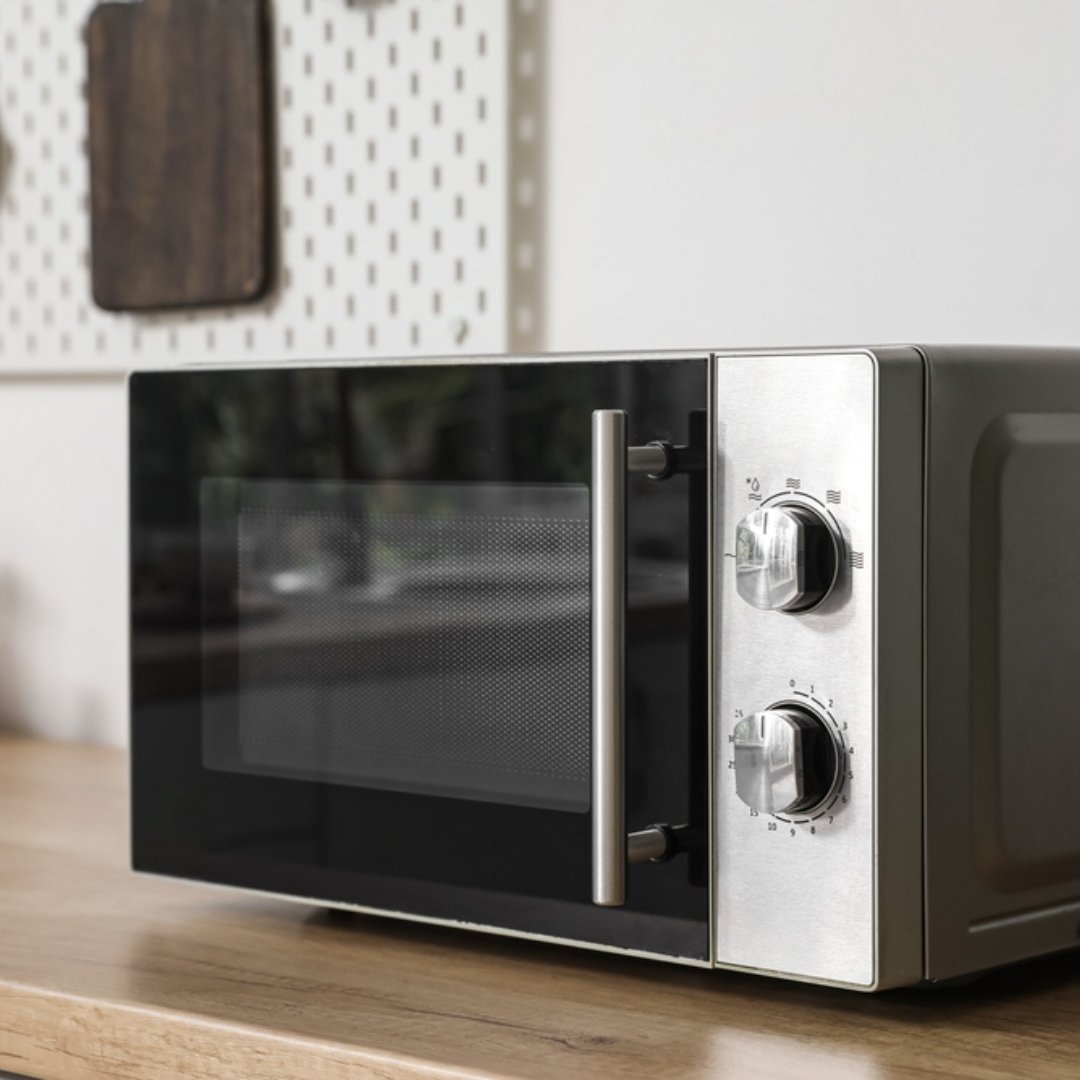
Microwave ovens are essential appliances in homes, offices, and commercial kitchens. They provide quick and efficient heating, making daily tasks easier. However, as with all electrical devices, microwaves require periodic safety checks—especially for radiation leakage.
Although both Basic Testing and Certified Leakage Testing help identify potential risks, they differ greatly in accuracy, purpose, and reliability. Understanding these differences ensures that you make safer decisions for your home or workplace. To Know More Click Here
1. What Is Basic Testing?
Basic testing is the most straightforward and commonly used method for checking a microwave’s safety. It is typically performed by homeowners who want a quick assessment without professional tools.
How Basic Testing Works
- It usually involves simple tools like testing rods or budget microwave detectors.
- Additionally, users check common leakage points such as the door seal, hinges, and edges.
- As the microwave runs, the tool reacts to the presence of microwave radiation, indicating potential leakage.
Best Suited For
- Home users
- Quick routine checks
- Non-critical environments
Advantages
- Easy to perform at home
- Highly affordable
- Provides immediate feedback
- Helps identify major or visible leaks
Limitations
- Not highly accurate
- Cannot detect small or hidden leaks
- Does not meet international safety standards
- Cannot be used for official compliance or workplace reporting. To Know More Click Here
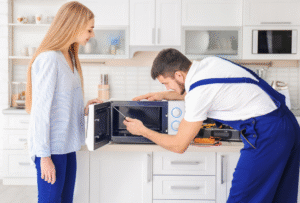
2. What Is Certified Leakage Testing?
In contrast, certified leakage testing is a professional and standards-based inspection. It is far more accurate and is essential where safety regulations apply.
How Certified Testing Works
- It is carried out by certified technicians trained to detect even the smallest leaks.
- Moreover, they use calibrated equipment that measures radiation in milliwatts per square centimeter (mW/cm²).
- The testing also follows strict safety standards such as:
- AS/NZS 60335 (Australia & New Zealand)
- IEC international regulations
- Local workplace safety guidelines
Best Suited For
- Commercial kitchens
- Hospitals and laboratories
- Industrial facilities
- Businesses requiring compliance documentation
Advantages
- Highly accurate results
- Detects even minimal leakage
- Fully compliant with safety standards
- Provides official reports and certificates
- Helps ensure staff and customer protection
Limitations
- Costs more than basic testing
- Requires professional service
- Needs periodic calibration of equipment
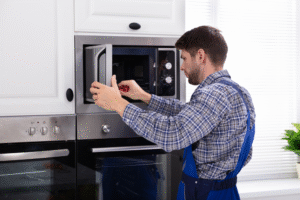
3. Key Differences Explained
To better understand the distinction, here is a clear and descriptive comparison:
- Accuracy – Basic testing offers only a rough estimate of leakage, whereas certified testing provides precise, calibrated measurements that meet global safety standards.
- Tools Used – While basic testing uses simple rods or low-range detectors, certified testing relies on professional-grade equipment specifically designed for microwave leakage analysis.
- Who Performs It – Basic testing can be done by anyone at home, but certified testing must be performed by trained and certified technicians.
- Compliance – Basic testing is not legally recognized. On the other hand, certified testing complies with workplace safety regulations and is required for audits.
- Leak Detection Ability – Basic methods detect only major leaks. Meanwhile, certified testing identifies even the smallest leaks that could become harmful over time.
- Documentation – Basic testing provides no formal record. However, certified testing includes official reports that can be used for safety audits and compliance checks.
4. Why Certified Leakage Testing Matters More in Many Cases
Although basic testing is helpful for quick checks at home, it is not enough when safety, compliance, or frequent microwave usage is involved. Therefore, certified leakage testing becomes crucial in places where employee safety, public health, or legal obligations are tied to equipment performance.
For example:
- Commercial kitchens rely on certified testing to ensure their equipment meets regulations.
- Hospitals require accurate testing because staff work near microwaves daily.
- Companies need compliance documents to pass safety inspections.
Thus, certified testing offers both protection and peace of mind. To Know More Click Here
Conclusion
Even though basic testing is convenient and inexpensive, it cannot match the accuracy and reliability of certified leakage testing. While the former helps with quick home checks, the latter ensures full compliance, safety, and long-term protection.
With proper knowledge and regular inspections, you can confidently maintain microwave safety in any environment. Ultimately, safety begins with choosing the right type of testing—and certified leakage testing provides the highest level of assurance.
SafeTag – Your Safety Partner in New Zealand
Ensure workplace safety and compliance with SafeTag’s professional testing services. We offer certified solutions for Electrical Testing & Tagging, RCD Testing, Microwave Leakage Testing, and Portable Appliance Testing (PAT). Trust our experts for hassle-free, on-site service tailored to your business needs.